For partners
Find the 30-second pitch, quick answers and complete guide for each park.
Chankanaab
Reef Pathway
The pitch · 30 seconds
«Chankanaab is one of Cozumel's most iconic natural parks. It brings together a beautiful lagoon, clear Caribbean waters, snorkeling, family spaces and a cultural interpretive path. Here, enjoying the park also means helping us protect it.»
Short version
«Chankanaab is the Reef Pathway: a family park on the Caribbean, where the lagoon, the sea, interpretive culture and Cozumel hospitality become memories.»
Quick answers
What are your opening and closing times?
«Admission is from 8 in the morning to 4 in the afternoon, and the ticket office sells until 3. If you are already inside, you can stay until 5. The park is closed on Sundays, unless a Sunday opening is announced in advance.»
What does Chankanaab mean?
«Chankanaab means small sea. It refers to the natural lagoon inside the park.»
Why is the lagoon special?
«Because it is a very distinctive inland body of water, connected to Cozumel’s subsoil and marine environment.»
Is there a reef?
«Yes, Chankanaab is associated with a valuable reef environment. That is why it should be enjoyed with care.»
May I touch the corals?
«No. Corals are alive and delicate. You may observe and photograph them without touching them.»
What fish will I see?
«You may observe tropical fish and marine life, but it depends on the day’s natural conditions.»
Is the water always crystal clear?
«Visibility is usually very good, but it can change with the weather and the sea.»
What time is the sea lion show?
«At 10:00 and 14:30. The schedule may vary.»
Is the pre-Hispanic walk original?
«This is a cultural interpretive path, with pieces inspired by Mesoamerican heritage.»
What are the underwater sculptures?
«They are the Christ of Chankanaab and the Virgin of Chankanaab, part of the park’s identity, visible when snorkeling and diving.»
Where can I snorkel?
«I will be happy to show you the appropriate areas and explain the safety recommendations.»
Institutional recommendations
These are a basis for presenting the park to your clients. What matters is conveying the same truth: nature, family, hospitality, care. BEFORE SAYING YES What we do not promise Visibility or specific species Never say «you will definitely see turtles» or «it is always crystal clear». Sea conditions change, and an unfulfilled promise becomes a complaint on the way out. The lagoon's exclusivity Never say «it is the only lagoon like this in the world». Without a validated technical fact sheet, say «a very special condition» and «natural distinctiveness». Archaeological authenticity of the pre-Hispanic path These are not original ruins or pieces found here. It is an interpretive trail. For an original archaeological site, Cozumel Parks has San Gervasio. WE NEVER SAY · WE SAY INSTEAD AVOID BETTER «I don't know.» «Let me check so I can give you the correct information.» «That's not my job.» «I will gladly tell you who can help you.» «Ask over there.» «I will take you / show you exactly where.» «It's just a beach.» «Chankanaab brings together lagoon, coast, reef and family experiences.» «Corals are rocks.» «Corals are living, delicate organisms.» «You can touch the fish here.» «Marine life is observed and respected.» «It's all freshwater here.» «It is a very special coastal lagoon, with brackish conditions connected to the sea.» «The water is always equally crystal clear here.» «Water conditions may vary, but the lagoon is recognized for its beauty and transparency.» «This lagoon is an enclosed reef.» «Its clarity and marine life make it one of Chankanaab's natural symbols.» ENGLISH The minimum in English Welcome / opening «Welcome to Chankanaab. We're very glad to have you here.» The reef «Please enjoy the reef by looking, not touching. The corals are alive and very delicate.» When you don't know «Let me check that for you so I can give you the right information.» Thank you «Thank you for helping us take care of this place.» WHAT IS IN THE PARK FROM THE OFFICIAL MAP Attractions and services Official park map. Tap it to enlarge it — it helps you show visitors where to find what they are looking for. Open the large map The names are written exactly as they appear on the park's official map, in Spanish and English. The $ sign marks what the map identifies as having an additional cost. BEFORE SAYING «INCLUDED» What admission includes depends on the fare purchased. Before offering a service as included, check the conditions of your agreement with the Foundation. Example: at Punta Sur, the «El Tatich» boat trip is included in a full-price ticket purchased at the ticket office; with a tour operator fare, it is purchased separately. IN THE WATER Underwater sculpture of El Cristo Underwater Christ statue Underwater sculpture of the Virgin Underwater madonna statue Caletita Inlet swimming area Manatees Manatees Coral Restoration Program Reef Restoration Snorkel $ the charge is only for renting equipment from the dive shops; there is no charge with your own equipment Snorkel Snuba $ Snuba Seatrek $ Seatrek Dolphin Discovery dolphinarium $ Dolphin Discovery La quebrada for certified divers $ Underwater cave for certified divers ON LAND Chankanaab lagoon Chankanaab lagoon Sea lion show 10:00 and 14:30 · the schedule may vary Sea lions show Tropical Garden Tropical Garden Pre-Hispanic replicas Prehispanic replicas Maya hut Mayan hut Swimming pool Swimming pool Mi México Lindo cantina Mi México Lindo Bar Natural Spa $ Natural Spa SERVICES Ticket office Tickets Information Info Restrooms Restrooms Showers and changing rooms Showers & dressing rooms First aid kit First aid kit Life jackets Life vests Hammocks and beach chairs Hammocks and beach chairs The Cabanas Beach Private cabanas Parking $ Parking lot Locker rental $ Locker rental Pharmacy $ Pharmacy Photography stand $ Photography Service Handcrafts and souvenirs $ Souvenirs & handcrafts Coffee shop $ Coffee shop DINING AND DIVING Eight restaurants and bars —Dolphin Discovery, Waikiki, Bar La Laguna, Restaurante La Laguna, Sea Lion, Bar Linda, El Bucanero and Happy Crab— and five dive shops. OUT OF SERVICE OR SEASONAL The area where the crocodiles used to be is out of service, awaiting a new project. Say this beforehand, not when the visitor arrives and cannot find it. WHERE WE COME FROM THE BRAND What Cozumel Parks is Cozumel Parks is the experience brand of the Fundación de Parques y Museos de Cozumel, a state organization that manages the island's four main parks and museums. Each space represents a Pathway of the Sacred Island: four ways to experience Cozumel with depth, respect and purpose. Chankanaab Reef Pathway FEEL Punta Sur Nature Pathway EXPLORE San Gervasio Sacred Pathway TRANSCEND Museo de la Isla History Pathway UNDERSTAND 1983 TO 2026 The timeline 1983 The «Laguna de Chankanaab» Patronato is founded through the efforts of citizens of Quintana Roo, mainly Cozumel, to rescue the lagoon and ensure the survival of its flora and fauna. 1987 The Fundación de Parques y Museos de Cozumel is created by decree on March 9. Its purpose includes promotion, CONSERVATION, protection, maintenance and administration. 1996 Punta Sur declaration. 2016 Cozumel joins UNESCO's World Network of Biosphere Reserves in March. 2026 Ten years have passed since its incorporation, and visitors enter the work of conservation rather than simply looking at it. Giving back to the island is not a marketing idea from 2026: it is the purpose for which the Foundation was created 39 years ago. And in Chankanaab, it began four years before the Foundation itself. WHAT THIS PLACE IS THE HEART OF THE PARK The lagoon: the small sea The lagoon: the small inland sea that gives the park its name. Our own photograph, 2026. The Chankanaab lagoon is the park's symbolic heart. Its presence gives the space its name, identity and memory. For generations of Cozumel residents, it has been a place of emotional significance: landscape, rest, family visits and pride in the island's nature. It can be explained as a «small sea» inland, with brackish conditions connected to Cozumel's marine environment. The island's limestone geology allows underground water circulation, and in coastal areas this water may mix with marine influences. HOW TO SAY IT TO THE VISITOR «The lagoon is the origin of the name Chankanaab. It is a small inland sea, very special to Cozumel, where subsurface conditions and the marine environment come together.» SAFE WORDING «The Chankanaab lagoon is recognized for a very special condition: an inland body of water, brackish in character, linked to the marine environment and with life associated with the reef. That distinctiveness explains part of its beauty, clarity and natural value.» WITH INSTITUTIONAL CAUTION The lagoon has been described as a saltwater coastal cenote with reef life. The information is powerful, but until there is a validated internal technical fact sheet, it must not be stated absolutely: say «a very special condition» and «natural distinctiveness» — that is what the wording above is for. The reason matters as much as the rule: without a supporting fact sheet, such information stops being information and becomes a promise. If the Management authorizes the fact sheet, it is incorporated as a highlighted fact. Chankanaab is not just a beautiful lagoon: it is a small sea where the subsurface, the Caribbean and marine life meet. MEMORY AND PRIDE Born from the community's care Chankanaab's institutional history is linked to community efforts. The «Laguna de Chankanaab» Patronato, created in 1983, arose from the participation of citizens of Quintana Roo —mainly Cozumel— with the goal of rescuing the lagoon and ensuring the survival and development of marine and terrestrial flora and fauna. Chankanaab was not born solely as a tourism product. It was also born as a response to protect, care for and restore a space valuable to the community. HOW TO SAY IT TO THE VISITOR «Chankanaab has a history of protection and rescue. The Cozumel community promoted efforts to care for this space and turn it into a park to enjoy responsibly.» ENVIRONMENTAL CONTEXT The reef and marine life Marine life is observed, respected and not touched. Cozumel is linked to the Mesoamerican Reef System, recognized as the largest barrier reef in the Western Hemisphere and one of the world's most significant coral systems. Chankanaab is not just a beach or lagoon: it is an accessible gateway to discover, enjoy and respect Cozumel's marine life. The clarity of the water allows the seabed, coral formations and fish to be observed, making snorkeling an immediate experience even for non-experts. What matters is not memorizing species, but conveying an idea: marine life is observed, respected and not touched. Corals are living organisms, not rocks or plants: shelter, food and home to many species. Cozumel has hard corals, soft corals, gorgonians, sea fans and sponges. HOW TO SAY IT TO THE VISITOR «Corals are alive and very delicate. You can observe, photograph and enjoy them, but it is important not to touch them or stand on them.» EXPERIENCES IN THE WATER Snorkeling, diving and the sculptures The Cristo de Chankanaab. Together with the Virgen de Chankanaab, they are part of the park's identity. Snorkeling and diving are key experiences, and they are also the moments when service must be clearest: safety, guidance, care rules, permitted areas, use of equipment and assistance. On the seabed are the Cristo de Chankanaab and the Virgen de Chankanaab, part of the park's memory and visual identity. Those are their names here and how we refer to them; in diving material they also appear as Cristo del Abismo and Virgen del Mar, and the official map labels them as underwater sculptures of El Cristo and the Virgin. WHAT THE TEAM DOES Provide guidance before entering the water. Explain permitted and prohibited areas. Remind visitors not to touch corals or marine fauna. Do not feed fish or remove organisms. Encourage correct equipment use. Refer questions to guides or trained staff. HOW TO SAY IT TO THE VISITOR «Enjoy snorkeling calmly. Observe, breathe, do not touch the seabed or corals, and if you need support, we are here to guide you.» THE EXPERIENCE ON LAND Beach, gardens and hospitality For a cruise visitor, this may be their first image of Cozumel. Chankanaab has a deeply family-oriented character. Many people choose it because it combines sea, rest, food, shade, activities and time together. For a cruise visitor, it may be their first image of Cozumel; for a family, the main memory of their vacation. The park offers many options —admission, beach, water activities, food, rest, shops and concessions—. This range enriches the visit, but confuses visitors if every person communicates something different. And it is not all sea. The surroundings include gardens, green areas, palm trees and tropical plants that accompany the experience facing the Caribbean — the map labels it Jardín Tropical. They show that Cozumel is not just coastline: it is also vegetation, shade and terrestrial landscape, and they provide a natural answer for those asking what to do out of the water. HOW TO SAY IT TO THE VISITOR «I will gladly explain the options so you can choose what best suits your visit. Besides the sea, Chankanaab has green areas and gardens that show part of Cozumel's tropical nature.» WITH INSTITUTIONAL CAUTION Do not invent species names. If a visitor asks what plant or tree it is and you do not know, say «let me check» or tell them who can provide more precise information. This is the same rule that applies to marine fauna. INTERPRETIVE CULTURE The pre-Hispanic path The waterfall on the replica trail. Behind it, to the right, one of the interpretive pieces. Our own photograph, 2026. Chankanaab has a path bringing together replicas and visual references to pieces, deities, sculptures and elements associated with Mesoamerican cultures. It allows visitors to approach symbols of Mexico's cultural memory visually and accessibly. The path's categories: entrances and main spaces —Arco de Labná, Arco San Gervasio, Casa Maya, El Caracol—; deities and symbolic figures —Chac Mool, Tláloc, Quetzalcóatl, Xochipilli—; monumental sculptures —Atlantes, colossal head, columns, thrones, jaguars—; and stelae, lintels and reliefs. Nobody needs to memorize every piece: what matters is communicating it as an interpretive trail and guiding visitors through it. HOW TO SAY IT TO THE VISITOR «This trail brings together representations inspired by pieces and symbols from Mesoamerican cultures. It is a cultural interpretive path that complements Chankanaab's natural experience.» WITH INSTITUTIONAL CAUTION It is not an original archaeological site, nor are its pieces authentic discoveries found here. Its value lies in serving as an interpretive and cultural trail. For an original archaeological site, Cozumel Parks has San Gervasio. HOW IT IS SAID FIRM KINDNESS Speaking about conservation without scolding AVOID BETTER «Don't touch.» «To protect the reef, we ask you to observe without touching.» «It's prohibited.» «For safety and conservation, this area is not available.» «You can't.» «I will gladly show you the appropriate area to enjoy.» «Because that's the rule.» «Thank you for helping us care for this space.» SERVICE TO PLAN THE VISIT Accessibility and inclusion What the park currently offers visitors with disabilities or reduced mobility, and older adults. We explain what is available; we also explain what is not. Wheelchair access and routes In your own wheelchair, you can explore the archaeological area, the surroundings of the lagoon and the cart area. The beach area cannot be entered in a wheelchair. For the beach, the park lends beach wheelchairs: there are two and they are free of charge. Accessible restroom All restrooms are adapted and reached without steps: the Roca restroom, those at Tequila, those at the beach and the new ones. Support for visitors with visual or hearing disabilities There is no braille material, sign language, audio guide or trained staff to provide guidance. We do not offer what is not available. Support for older adults There is shade and benches throughout the park. TO CLOSE PRINCIPLES Golden rules Describe Chankanaab as the Reef Pathway. Sea, lagoon, marine life, family and hospitality form one experience. Explain the lagoon as a «small sea», respectfully and clearly. Without absolute claims that have not been institutionally validated. Describe the reef as a living ecosystem. Not as a decorative landscape or a guarantee of sightings. Corals are alive and must not be touched. Look, yes; touch, no. The pre-Hispanic path is an interpretive trail. Not an original archaeological site, not authentic pieces from the site. Guide without pressuring; inform without intruding. Refer without abandoning. Turn rules into clear and kind invitations. Hospitality also educates. Do not promise what we cannot guarantee. Visibility, fauna and sea conditions may vary. Do not invent information. If we do not know, we check. Not knowing is not failing; inventing can be. Remember that memories are also built. We do more than serve: we help build memories of Cozumel. VALIDITY BEFORE COMMITTING TO A FACT Validity of this information Information current as of September 23, 2026, validated by the park Management. Hours, services and conditions may change: before committing to them with a client, confirm them with the Marketing Department of the Fundación de Parques y Museos de Cozumel, at mercadotecnia@cozumelparks.org. This page is updated at the same link; do not circulate printed copies or screenshots because they become outdated.
Punta Sur
Nature Pathway
The pitch · 30 seconds
«Punta Sur is the Nature Pathway of Cozumel Parks. Here you can experience the lighthouse, the lagoon, mangroves, beaches, wildlife, the Navigation Museum, and historic sites. It is a place to enjoy, respect, and protect.»
Short version
«Punta Sur is living nature: lighthouse, lagoon, mangroves, beach, wildlife and coastal history. Here, visitors discover one of the most authentic and natural parts of Cozumel.»
Quick answers
What are your opening and closing times?
«Admission is from 9 in the morning to 4 in the afternoon — after 4 no one is allowed in. If you are already inside, the Navigation Museum and the Lighthouse area stay open until 5. The park is closed on Sundays, unless a Sunday opening is announced in advance.»
Until what time may I climb the lighthouse or enter the Navigation Museum?
«On days when the park opens, from 9 in the morning to 5 in the afternoon. Please note that park admission closes at 4: no one may enter after that time, and only visitors already inside may climb the lighthouse.»
What is Punta Sur?
«The ecotourism park and the Nature Pathway of Cozumel Parks.»
What can I see here?
«Punta Celarain Lighthouse, beach, lagoon, mangroves, wildlife, birds, crocodiles, the Navigation Museum, the geotrail and El Caracol.»
Are there crocodiles?
«Yes, there are crocodiles. They live here in the wild — please keep your distance and follow the staff's directions.»
Why are mangroves important?
«The mangrove protects the coast, shelters wildlife and captures carbon. It is not just brush.»
What is Punta Celarain Lighthouse?
«A symbol of orientation, landscape and Cozumel’s historic relationship with the sea.»
What is the Navigation Museum?
«A space in the former lighthouse keeper’s house, about the evolution of navigation and lighthouses.»
What is the geotrail?
«An interpretive experience for walking, observing wildlife and learning with a low impact.»
What is El Caracol?
«A Maya archaeological vestige. It is named for the shells embedded in its structure and is considered a predecessor of the first lighthouses.»
What time does the “El Tatich” boat trip depart?
«At 12:00, 1:00 and 2:00 in the afternoon.»
Institutional recommendations
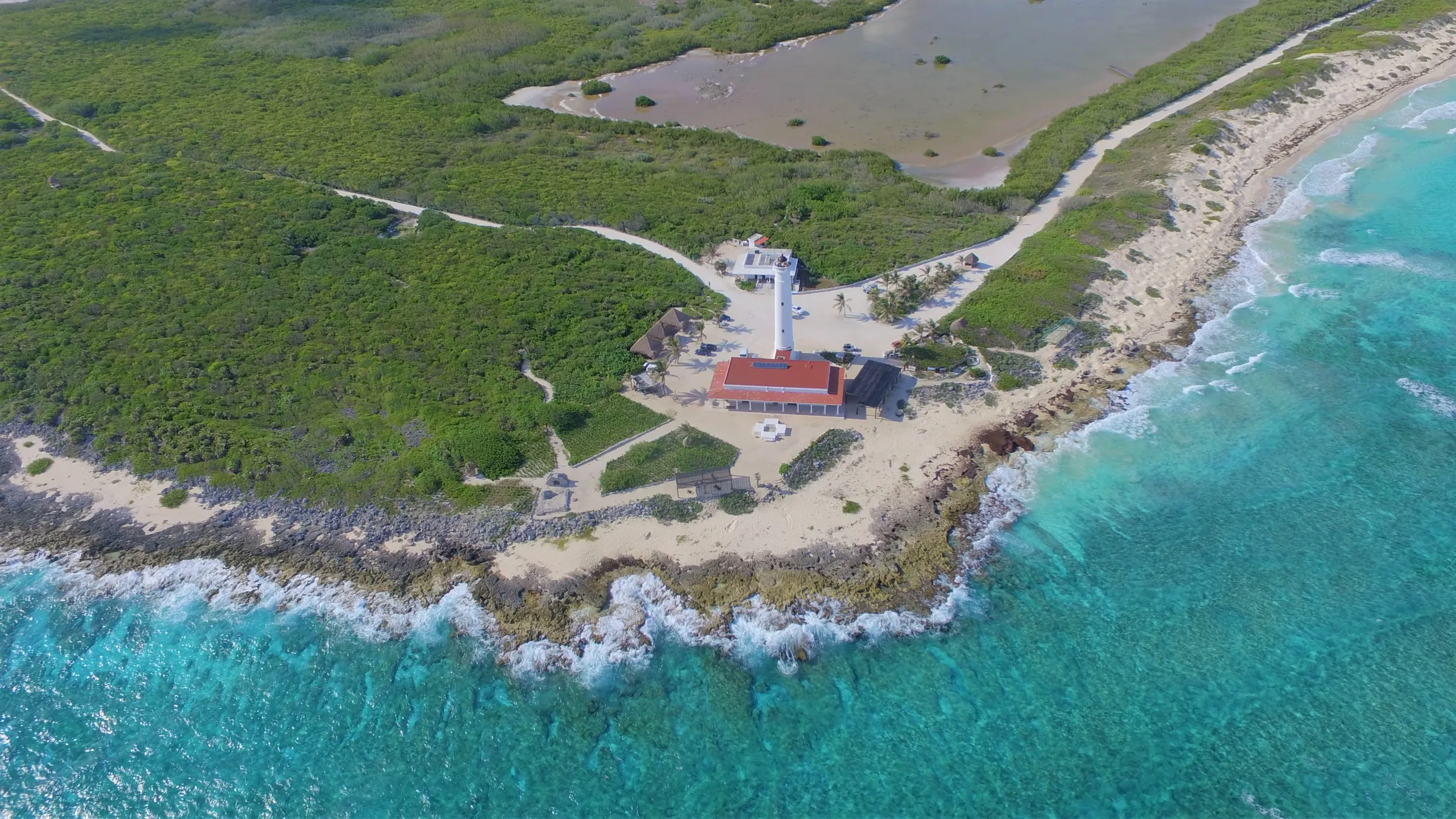
These are a basis for presenting the park to your clients. What matters is conveying the same truth: nature, family, hospitality, care. BEFORE SAYING YES What we do not promise That Eiffel designed the lighthouse The park Management says these are European designs and points to the English company Chance Brothers. This information is awaiting documentation, and meanwhile neither version is asserted. Calling it «Tumba del Caracol» For institutional communication, the site is El Caracol, which is what it is called in the park. INAH does record the other designation, because the structure's small size resembles a funerary mound; it comes from a romantic reading from the last century and is not used in daily operations. Fixed wildlife population figures Populations change with each monitoring exercise. Better: «Punta Sur is home to a great diversity of birds, reptiles, marine species and wildlife associated with wetlands and mangroves.» Guaranteed sightings The wildlife is in its habitat, not on display. You can say which species live in the park; not that the visitor will see them. That something is included, without knowing how the visitor entered What admission includes depends on the channel through which the visitor purchased. The «El Tatich» boat trip is included with a full-price ticket purchased at the ticket office; those arriving with an agency or tour operator purchase it separately at the ticket office when entering the park. WE NEVER SAY · WE SAY INSTEAD AVOID BETTER «I don't know.» · «Who knows.» «Let me check.» «Ask over there.» · «That's not my job.» «I will take you to someone who can help you.» «I think it's…» · «They say…» «I prefer to check so I can give you the correct information.» «There's only beach here.» «That space has natural value, which is why we protect it.» «Go wherever you want.» · «Nothing will happen.» «To care for the park, we ask you to follow this instruction.» «Eiffel designed it.» «These are European designs; the precise origin is awaiting documentation.» «It's the Tumba del Caracol.» «The site is known as El Caracol.» ENGLISH The minimum in English Welcome / opening «Welcome to Punta Sur, the Nature Pathway of Cozumel Parks.» The lighthouse «That is the Punta Celarain lighthouse. From the top you can see the sea, the coast and the lagoon.» Wildlife «Please do not feed or approach the animals. They are in their natural habitat.» Staying on the path «Please stay within the marked areas — it protects both the wildlife and you.» When you don't know «Let me check that for you so I can give you the right information.» WHAT IS IN THE PARK FROM THE OFFICIAL MAP Attractions and services Official park map. Tap it to enlarge it — it helps you show visitors where to find what they are looking for. Open the large map The names are written exactly as they appear on the park's official map, in Spanish and English. The $ sign marks what the map identifies as having an additional cost. BEFORE SAYING «INCLUDED» What admission includes depends on the fare purchased. Before offering a service as included, check the conditions of your agreement with the Foundation. Example: at Punta Sur, the «El Tatich» boat trip is included in a full-price ticket purchased at the ticket office; with a tour operator fare, it is purchased separately. IN THE WATER Laguna Colombia, Chunchacab and X'tacún Lagoon system Chunchacab Beach Chunchacab Beach The most beautiful beach The most beautiful beach Reef Reef Mangrove Restoration Mangrove Restoration Turtle nesting area Sea turtle nesting area Snorkel $ Snorkel Kayak $ Kayak ON LAND Faro Celarain Celarain lighthouse Navigation Museum Navigation museum Observation tower Observation Tower Maya vestige «El Caracol» «El Caracol» Mayan vestige The farthest point south in Mexico The last point of Mexico Geological Trail · Observation Trail Nature Trail Crocodiles Cocodriles Wild flora and fauna Wild flora & fauna Hammocks and beach chairs Hammocks and beach chairs «El Tatich» boat trip 12:00, 13:00 and 14:00 · included in a full-price ticket purchased at the ticket office; those arriving with an agency purchase it at the ticket office upon entering Catamaran boat ride «El tatich» Massage · Natural spa $ Natural spa SERVICES Ticket office Tickets Information Info Restrooms Restrooms Showers and changing rooms Showers & dressing rooms First aid kit First aid kit Meeting point Meeting point Life jackets Life vests Parking Parking lot Handcrafts and souvenirs Souvenirs & handcrafts DINING AND DIVING Seven restaurants and bars within the park. OUT OF SERVICE OR SEASONAL The wildlife observation pier —the Torre Cocodrilo— has a repair request pending. It can be visited, but the observation circuit does not form a complete loop and the route is awkward. Say this BEFOREHAND, not when the visitor has already walked there. WHERE WE COME FROM THE BRAND What Cozumel Parks is Cozumel Parks is the experience brand of the Fundación de Parques y Museos de Cozumel, a state organization that manages the island's four main parks and museums. Each park represents a Pathway of the Sacred Island: four ways to experience Cozumel with depth, respect and purpose. Chankanaab Reef Pathway FEEL Punta Sur Nature Pathway EXPLORE San Gervasio Sacred Pathway TRANSCEND Museo de la Isla History Pathway UNDERSTAND 1983 TO 2026 The timeline 1907 The lighthouse keeper's house is built; today it houses the Navigation Museum. It retains a cistern integrated into the building, holding around 20,000 liters, an old water reservoir and remains of the previous lighthouse. 1983 The «Laguna de Chankanaab» Patronato is founded through the efforts of Cozumel citizens — the community origin of what later became the Foundation. 1987 The Fundación de Parques y Museos de Cozumel is created by decree on March 9. Its purpose includes promotion, CONSERVATION, protection, maintenance and administration. 1934 The current Faro de Punta Celarain is built. 1996 Punta Sur declaration, on July 15: a state ecological park of 1,130.644 hectares, in the area known as Laguna Colombia. 1999 The park opens to the public on August 22. 2016 Cozumel joins UNESCO's World Network of Biosphere Reserves in March. 2026 Ten years have passed since its incorporation, and visitors enter the work of conservation rather than simply looking at it. Giving back to the island is not a marketing idea from 2026: it is the purpose for which the Foundation was created 39 years ago. Punta Sur has been declared an ecological park for thirty years. WHAT THIS PLACE IS AQUATIC ECOSYSTEM The lagoon system The lagoon system seen from the air: the bodies of water, mangrove islands and, in the background, the Lighthouse. Our own photograph, 2026. According to hydrographic information from the Secretaría de Marina, the system consists of three lagoons: Chunchacab, X'tacún and Laguna Colombia. Around them, water, mangroves, coastal vegetation and wildlife interact constantly. It provides habitat for different species, is associated with mangroves and wetlands, helps maintain natural ecosystem processes, allows nature observation and functions as a natural laboratory for crocodile monitoring. HOW TO SAY IT TO THE VISITOR «Laguna Colombia and the Punta Sur lagoon system are a fundamental part of the park's natural balance. Species live here that depend on the mangroves, the water and the tranquility of the surroundings.» SILENT GUARDIAN The mangroves The mangroves protect the coast, shelter the park's life and capture carbon. Although sometimes they seem to be just vegetation, mangroves fulfill fundamental functions for life in the park and the global balance. According to CONABIO, mangroves are woody, dense, tree or shrub vegetation formations composed of one or more mangrove species. SEMARNAT states that they function as feeding, shelter and growth areas for crustaceans, juvenile fish and other flora and fauna. The four Mexican species are here: red mangrove (*Rhizophora mangle*), black mangrove (*Avicennia germinans*), white mangrove (*Laguncularia racemosa*) and buttonwood (*Conocarpus erectus*). These are the species associated with the park's mangrove ecosystem. Within the protected natural area, there is a coastal lagoon system known as Laguna Colombia, formed by three lagoons: Laguna Colombia, Laguna Chunchacab and Laguna X'tacún. They occupy almost 80 % of the protected area. Their water is brackish because of the connection to the sea, freshwater emerging from the aquifer —visible from the Torre Cocodrilo— and rainwater. WHAT THE MANGROVES DO Provide shelter for birds, fish, crustaceans and other species. Function as feeding, growth and protection areas for wildlife. Help protect the coast. Contribute to water quality. Are an essential part of coastal wetlands. Function as a reservoir of marine and terrestrial species. Help capture carbon from the atmosphere. HOW TO SAY IT TO THE VISITOR «Mangroves are a key coastal ecosystem: they protect the coast, shelter species, help balance the water and capture carbon. Caring for them means caring for Punta Sur's life.» DIVERSITY OF ENVIRONMENTS One park, several landscapes The farthest point south in Mexico. Beyond its broad scenic beauty, Punta Sur is a collection of interconnected ecosystems adapted to conditions of sun and temperature, salinity, flooding, wind, sand, humidity and coastal soils: forests, wetlands, mangroves, palm groves and coastal dunes. It also connects to neighboring ecosystems of great importance: seagrasses and the reef ecosystem. Wetlands include ecosystems such as mangroves and seagrasses: do not name them as if they were separate things. This is not our own description: the Management Program for the Isla de Cozumel Flora and Fauna Protection Area recognizes coral reefs, seagrasses, mangroves, coastal dune vegetation, tasistales-saibales, medium-height forests and systems of wetlands and coastal lagoons on the island. HOW TO SAY IT TO THE VISITOR «Punta Sur is a collection of connected natural environments: forest, wetland, mangrove, dune, coast and sea. That is why we care for it and ask you to respect the permitted areas.» PARK ICON The Faro de Punta Celarain The Faro de Punta Celarain, with the coast and the Caribbean Sea. It is one of the park's most recognizable points. The correct reference is «Faro de Punta Celarain», because lighthouses are usually named after the place where they stand. From there, you can enjoy a broad view of the Caribbean Sea, coast, vegetation and Laguna Colombia. The lighthouse does more than reveal the landscape: it recalls Cozumel's historical relationship with the sea, navigation and coastal guidance. HOW TO SAY IT TO THE VISITOR «The Faro de Punta Celarain is one of Punta Sur's symbols. From above, you can see the park's natural strength: the sea, coast, lagoon and landscape that make this place unique.» MARITIME MEMORY The Navigation Museum and the lighthouse keeper's house It is located in the former lighthouse keeper's house, dating from 1907. Its route runs from pre-Hispanic times to the 20th century, through sailing, steamships and the technological development of lighthouses. One of its rooms is dedicated to the park's natural heritage, and the others occupy the original spaces where lighthouse keepers' families lived. On site, a cistern integrated into the building, holding around 20,000 liters, an old water reservoir and remains of structures from the previous lighthouse can be seen. It is open and can be visited on days when the park opens, from 9:00 to 17:00 —park admission closes at 16:00, so after that time only those already inside can enter—. Visitors can request the free guide service, which explains in Spanish and English. HOW TO SAY IT TO THE VISITOR «The Navigation Museum is in the former lighthouse keeper's house. Here you can learn how navigation has evolved and the importance of lighthouses in the region's maritime history.» WITH INSTITUTIONAL CAUTION Do not say Eiffel designed it. The park Management says these are European designs and points to the English company Chance Brothers; the information is awaiting documentation, and meanwhile neither version is asserted. INTERPRETIVE EXPERIENCE The Geosendero Punta Celarain It allows people to approach nature respectfully and with low impact, and is an ideal space for observing birds and wildlife. With a specialist guide, it becomes an opportunity to learn about Cozumel's geological evolution, ecosystems and biodiversity, in a low-impact activity. It also helps relieve the busiest sites, such as the lighthouse, and diversifies the park's offerings. HOW TO SAY IT TO THE VISITOR «The geological trail is a way to discover Punta Sur by walking, observing and learning. It is ideal for those who want to discover the park's nature more calmly and respectfully.» CULTURAL HERITAGE El Caracol El Caracol at dawn. It is proposed that braziers were lit on its roof, and the column of smoke made it visible from the sea. Up close, you can see shells and coral embedded in the stone — hence the name. Our own photograph, 2026. It is a Maya archaeological vestige within the park. Its name relates to marine shells embedded in its structure, interpreted as part of a natural sound system: it is proposed that the structure made sound in strong wind, and that this sound served as a warning of bad weather. It is also considered a precursor to the first lighthouses. It is proposed that braziers were lit on its roof, and the smoke column by day and gleam by night made the point visible from the sea. If so, Punta Sur holds two ways to solve the same problem, separated by centuries: El Caracol and the Faro de Punta Celarain, fire and lamp, in the same park. Coastal navigation —sailing along the coast— was marked by structures such as El Caracol, supported by references in the landscape itself: rocky outcrops, prominent trees, pole flags with colored feathers and, very probably, those braziers. It is very probable that El Caracol was visible from the sea and that the dune now surrounding it consolidated over the last five hundred years. HOW TO COMMUNICATE IT Speak respectfully and use basic, correct information. Recommend following the site's directions. Avoid touching, climbing or altering structures. If we do not know a fact, check it. Do not invent legends or joke about Maya culture. Do not present the site as «decoration» or exaggerate ritual explanations. HOW TO SAY IT TO THE VISITOR «El Caracol is a Maya archaeological vestige located in Punta Sur. The shells embedded in its structure are interpreted as a sound system that warned of bad weather, and it is considered a precursor to the first lighthouses: fires were lit on its roof to be seen from the sea. Centuries later, a few steps away, stands the Faro de Punta Celarain.» WITH INSTITUTIONAL CAUTION In the park it is called «El Caracol». Nobody calls it «Tumba del Caracol»: this comes from a romantic version from the last century, and although INAH does record that name because of the structure's small size, resembling a funerary mound, it is not used in daily operations. The lighthouse account is presented as an interpretation, not a proven fact. Say «it is considered», «it is proposed», «it is interpreted» — never «it was Mexico's first lighthouse» or «the Maya lit fires here». It is a valuable explanation and greatly enriches the visit, and for that very reason it most tempts people to overstate it. An interpretation told honestly holds up; told as certainty, it collapses before the first visitor who knows the subject. WILDLIFE The fauna Wildlife is not touched, fed or chased. Punta Sur is home to species associated with mangroves, wetlands, coast, low forest and marine environments: reptiles, birds, fish, crustaceans and other wetland species. American crocodile. The Foundation has monitored *Crocodylus acutus* in the lagoon bodies. Its presence is an indicator of the ecosystem's proper condition — either it is an indicator or it is not; do not say «an important indicator», which asserts neither one nor the other. Birds. Mangroves and wetlands are important areas for resident and migratory birds; the park is a valuable space for responsible observation. HOW TO SAY IT TO THE VISITOR «Crocodiles live in their natural habitat. They must be observed respectfully, without approaching or feeding them, and always following staff directions.» WITH INSTITUTIONAL CAUTION Do not give fixed wildlife population figures if they are not up to date or confirmed: they change with each monitoring exercise. Better to say Punta Sur is home to a great diversity of birds, reptiles, marine species and wildlife associated with wetlands and mangroves. HOW IT IS SAID FIRM KINDNESS Speaking about conservation without scolding AVOID BETTER «Don't touch.» · «It's prohibited.» «To protect vegetation and wildlife, we ask you to stay in the permitted areas.» «Don't feed them.» «It is important not to feed or approach the animals: they are in their natural habitat.» «Because that's the rule.» «Thank you for helping us conserve Punta Sur.» SERVICE TO PLAN THE VISIT Accessibility and inclusion What the park currently offers visitors with disabilities or reduced mobility, and older adults. We explain what is available; we also explain what is not. What a wheelchair user can explore The park has access ramps in the Lighthouse service areas, in the Navigation Museum and on the piers in the crocodile and catamaran area; the vessel has adapted spaces, and the beach has a walkway to facilitate mobility. There is also a beach wheelchair for use in the park. Lighthouse access and alternatives The lighthouse opens on days when the park opens, from 9:00 to 17:00 —with park admission closed from 16:00— and has 133 steps. Because of the structure and number of steps, it is recommended for people in suitable physical condition. Those who do not climb are offered the Navigation Museum or hammock area, to contemplate the landscape, read or rest listening to the waves break — and these are offered, rather than merely saying they cannot climb. Accessible restroom Every service unit in the park has an access ramp and a cubicle for people with special needs. Support for visitors with visual or hearing disabilities 🔴 Currently none is available: no braille material, sign-language interpreter, audio guide or trained staff to guide them. We say this honestly and accompany the person; we do not promise support that does not exist. Support for older adults There are benches outside the «Torre Cocodrilo» interpretation area, in the Lighthouse and Museum service areas and at the entrance to the beach area. TO CLOSE PRINCIPLES Golden rules Speak proudly, without exaggeration. Punta Sur has enough real value; it does not need inventions. Give correct information. If we do not know, we check. Do not touch or alter fauna, flora or vestiges. What is cared for remains. Do not minimize environmental rules. Rules are not inconveniences; they are part of conservation. Do not present Maya culture as a show. Cultural heritage is communicated respectfully. Care for language. How we say things also builds the experience. Remember that everyone communicates. It is not only the guide who tells the story: so does the person who greets, cleans, guides and cares. Avoid uncorroborated or changing information. In flora, fauna and uncertain history, it is better to check before repeating. Use the correct names. Faro de Punta Celarain and El Caracol. VALIDITY BEFORE COMMITTING TO A FACT Validity of this information Information current as of September 23, 2026, validated by the park Management. Hours, services and conditions may change: before committing to them with a client, confirm them with the Marketing Department of the Fundación de Parques y Museos de Cozumel, at mercadotecnia@cozumelparks.org. This page is updated at the same link; do not circulate printed copies or screenshots because they become outdated.
San Gervasio
Sacred Pathway
The pitch · 30 seconds
«San Gervasio is the most important archaeological site in Cozumel and part of our Sacred Pathway. It shows that the island is not only sea and nature: it is also history, roads, trade, daily life and Maya cultural memory. Tradition links it to the pilgrimage to Ixchel. We tell it with respect and without inventing.»
Short version
«San Gervasio is a very important archaeological site for Cozumel. It is associated with Maya cultural memory and the tradition of pilgrimage to Ixchel. We visit it respectfully to understand the island’s history better.»
Quick answers
What are your opening and closing times?
«We're open every day, from 8 in the morning to 4 in the afternoon. The gate on the highway closes at 3:45, since it takes about 15 minutes to reach the ticket office. If you are already inside, you can stay until 4:30.»
What is San Gervasio?
«It is the most important archaeological site in Cozumel and a key place for understanding the island’s Maya history.»
Is it associated with Ixchel?
«Yes, historical tradition links Cozumel and San Gervasio with pilgrimage to Ixchel, but we explain it with care and respect.»
What is that arch?
«It was the gateway to the sanctuary from the north. It stands on a sacbé, one of the site’s white roads.»
What are sacbés?
«Those white roads are called sacbés. They connected the different groups of buildings.»
Why may I not climb the structures?
«Because they are archaeological heritage and we must protect them so that they can be preserved.»
Did the Maya disappear?
«No. We say the ancient Maya to refer to those who built these sites, but Maya culture is still alive.»
May I take photos?
«Yes, following the site’s rules and avoiding actions that put its heritage at risk.»
What is the “Sacred Pathway”?
«It is how Cozumel Parks recognizes San Gervasio’s historic and heritage value within the narrative of the Sacred Island.»
How much time do I need?
«45 minutes.»
Is there somewhere to eat or use the restroom?
«The Visitor Center has a snack bar with drinks and light food, and restrooms. There are no services or water sales inside the archaeological site: I recommend using the restroom and bringing water before entering.»
Who is responsible for the site?
«The archaeological site is under the custody of INAH. Cozumel Parks manages the Visitor Center and access.»
Institutional recommendations
These are a basis for presenting the park to your clients. What matters is conveying the same truth: nature, family, hospitality, care. BEFORE SAYING YES What we do not promise That a specific building belonged to Ixchel INAH's own fact sheets warn that there is no evidence allowing any of San Gervasio's buildings to be directly associated with Ixchel, and that colonial chronicles locate the oracle at the site of today's city of San Miguel. We speak of tradition, not certainty about every structure. Rituals, ceremonies or favors granted Never say «we perform Maya rituals here», «this area grants wishes» or «Ixchel grants favors here». The word «sacred» does not authorize theatrical presentation. The specific function of a structure, if there is no certainty You can say «possible functions» or «what research allows us to interpret». A hypothesis is not turned into an absolute truth. El Ramonal as part of the visit INAH sources describe it as still being explored and not open to visits. It is mentioned only as part of the site's complexity. That a structure will be open Access may be restricted for conservation, restoration or maintenance work, and INAH decides this. Before recommending one, confirm. WE NEVER SAY · WE SAY INSTEAD AVOID BETTER «Ruins» as the main word «Archaeological area», «archaeological site», «vestiges» or «structures». «Ixchel lived here.» «Historical tradition links Cozumel with Ixchel, but we communicate cautiously.» «This building was Ixchel's temple.» «We can speak of what research allows us to interpret.» «The Maya disappeared.» «We speak of the ancient Maya — Maya culture is still alive.» «This is just for tourists.» «The site has heritage value for the island and for everyone.» «I don't know, ask over there.» «Let me check» or «I will gladly guide you». ENGLISH The minimum in English Welcome / opening «Welcome to San Gervasio, the Sacred Pathway of Cozumel Parks.» What it is «This is the most important Maya archaeological site on the island.» Ixchel «Tradition links Cozumel with a pilgrimage to Ixchel, a Maya deity. We share it as tradition, not as certainty about each building.» Not climbing «Please don't climb on the structures — they are protected heritage.» The Maya today «We say “the ancient Maya” — Maya culture is still alive today.» When you don't know «Let me check that for you so I can give you the right information.» WHAT IS IN THE PARK FROM THE OFFICIAL MAP Attractions and services Official 2026 map of the site, with its twenty-one named elements. Tap to enlarge it. The names are also in the list above, so they can be consulted without opening the map. Open the large map The names are written exactly as they appear on the park's official map, in Spanish and English. The $ sign marks what the map identifies as having an additional cost. BEFORE SAYING «INCLUDED» What admission includes depends on the fare purchased. Before offering a service as included, check the conditions of your agreement with the Foundation. Example: at Punta Sur, the «El Tatich» boat trip is included in a full-price ticket purchased at the ticket office; with a tour operator fare, it is purchased separately. ON LAND Small cave Small cave Ceiba tree Ceiba Tree Chicozapote tree Chicozapote Tree Ka'na Nah · Temple of Ixchel «Tall House» Ka'na Nah «Tall House» Temple Arch over the sacbé Archway over Sacbé Nohoch Nah Temple «Big House» «Big House» Temple Manitas · Elite Residence, named for the handprints preserved inside «Little Hands» Elite Residence Chichan Nah Oratory «Small House» «Small House» Shrine Temple of the Bats Temple of the Bats El Osario The Ossuary El Palacio The Palace Los Murales The Murals El Álamo Alamo Tree Building Las Columnas «The Columns» Los Nichos «The Niches» Building Pet Nah Altar «Round Building» Altar Tumba Altar Plataforma «The Tomb» Altar Platform Elite Oratory Private, Elite Oratory Elite Residence Elite Residence Structure 25B Structure 25B Altar in the Center of the Plaza Altar in Center of Plaza El Ramonal, under exploration; not open to visits Ramon Tree Complex SERVICES Entrance and Parador Entrance Ticket office Tickets Parking Parking Restrooms Restrooms Food and drinks Food & drinks Handcrafts and souvenirs Souvenirs & handcrafts Rest area Rest area DINING AND SHOPPING At the Parador: handcraft and souvenir shops and a single snack bar, with bottled drinks and snack food. There are no services inside the archaeological area. Around 100 meters in front of the Parador's main building is the trail, as well as the orchard and the heart-shaped planter: these are not part of the archaeological area route, and are suggested to visitors at the end as an extra. OUT OF SERVICE OR SEASONAL Some structures or areas may have temporarily restricted access for conservation, restoration or maintenance work, and climbing the vestiges is not allowed anywhere. Always respect the marked areas. INAH decides what closes and when, informs the park Management, which then informs admissions: before sending someone to a structure, confirm with admissions. El Ramonal is not open to the public. WHERE WE COME FROM THE BRAND What Cozumel Parks is Cozumel Parks is the experience brand of the Fundación de Parques y Museos de Cozumel, a state organization that manages the island's four main parks and museums. Each park represents a Pathway of the Sacred Island: four ways to experience Cozumel with depth, respect and purpose. Chankanaab Reef Pathway FEEL Punta Sur Nature Pathway EXPLORE San Gervasio Sacred Pathway TRANSCEND Museo de la Isla History Pathway UNDERSTAND 1983 TO 2026 The timeline Before 1519 San Gervasio develops from a small agricultural village into a city of economic and symbolic importance, covering around two square kilometers. Cozumel holds a significant place in Maya cultural and religious geography and coastal maritime routes. 1983 The «Laguna de Chankanaab» Patronato is founded through the efforts of Cozumel citizens — the Foundation's community origin. 1987 The Fundación de Parques y Museos de Cozumel is created by decree on March 9. Its purpose includes promotion, CONSERVATION, protection, maintenance and administration. 1996 Punta Sur declaration. 2016 Cozumel joins UNESCO's World Network of Biosphere Reserves in March. 2026 Ten years have passed since its incorporation, and visitors enter the work of conservation rather than simply looking at it. This island's memory is much older than any of our brands. San Gervasio is the part of Cozumel Parks that demonstrates this. WHAT THIS PLACE IS INSTITUTIONAL FRAMEWORK Who decides within the site Within the archaeological area, INAH is the authority. Everything that happens at the site —which structure opens or is restricted, what is allowed, how an emergency or a lost person is handled— is resolved in accordance with its laws and regulations, and decided by its staff. The Foundation manages the Parador —ticket office, admissions, services and concessions— and maintains access to the site from the transversal highway, which crosses the island from east to west. HOW TO SAY IT TO THE VISITOR «The archaeological area is under INAH's custody, and INAH is the authority within the site. Cozumel Parks manages the Parador and access. Within the area, we follow INAH's directions.» WITH INSTITUTIONAL CAUTION Nothing is promised or authorized on INAH's behalf: neither that a structure will be open, nor permission within the area. That is not our responsibility. INSTITUTIONAL FRAMEWORK What «Sacred» means, and what it does not The word must be handled very responsibly. It does not mean theatrical presentation, inventing ceremonies or presenting the site as a spiritual stage set. It means recognizing that we are in a heritage space with historical and cultural value that deserves respectful treatment. The Sacred Pathway's dominant emotion is reverence. Not tourist amazement: reverence for what survived, what was built, what deserves respect. HOW TO SAY IT TO THE VISITOR «San Gervasio forms part of the Sacred Pathway because it is an archaeological site of great value for understanding Cozumel's history. We explore it respectfully, explain it clearly and share it without inventing.» HISTORY AND CONTEXT The island's most important settlement The settlement extended across around two square kilometers. INAH recognizes San Gervasio as the most important of the settlements recorded in Cozumel. It is located inland, in an area with good freshwater availability — a key factor for life on the island. Research shows a very long occupation: from a small agricultural village to a city of economic and symbolic importance at the time of the Spanish arrival, extending across around two square kilometers. It was organized into main architectural groups, isolated structures, houses of perishable materials and spaces enclosed by stone walls. Its growth is related to exchange networks, daily life, political organization and religious functions. CULTURAL STRATEGY Ixchel: tradition, memory and respect Ixchel must be present in the site's communication, but not as an «urban legend» or a tourism hook. The correct approach is to treat her as a historical and cultural tradition associated with Cozumel, explained cautiously and with nuance. What we know: INAH's public information presents San Gervasio as a site associated with Ixchel, a deity linked to midwifery, fertility, medicine and weaving, and states that women from Maya settlements on the mainland made pilgrimages to Ixchel's sanctuary in Cozumel. What must be handled carefully: other fact sheets from INAH itself warn that colonial chronicles link Cozumel with the worship of Ixchel, but those references correspond to a site located where today's city of San Miguel stands, where the oracle is thought to have been. The same source indicates that so far there is no evidence allowing any of San Gervasio's buildings to be directly associated with Ixchel. HOW TO SAY IT TO THE VISITOR «San Gervasio is deeply associated with the tradition of pilgrimage to Ixchel, a Maya deity linked to fertility, medicine, midwifery and weaving. Today we communicate this respectfully: it is an archaeological site of great historical and cultural value, and we avoid inventing facts or rituals.» WITH INSTITUTIONAL CAUTION We do include Ixchel, because she forms part of the cultural memory associated with Cozumel and the Sacred Island narrative. But we communicate her as a recognized historical and cultural tradition, not as absolute certainty about every building or as a show. REGIONAL CONTEXT Pilgrimage, oracle and routes Colonial sources mention that Cozumel was important because of its relationship with a sanctuary or oracle dedicated to Ixchel. From different coastal ports, pilgrims sailed to the island, which also reinforced Cozumel's commercial significance within coastal maritime routes. It is useful to explain that Cozumel held a significant place in Maya cultural and religious geography, without reducing San Gervasio to a single function or presenting every building as a direct part of the worship of Ixchel. HOW TO SAY IT TO THE VISITOR «Cozumel was an important island for maritime routes, trade and religious tradition. San Gervasio helps us understand that historical significance, always respectfully and without inventing.» ELEMENTS OF THE SITE The sacbés: white roads The arch over the sacbé: the entrance gate to the sanctuary from the north. This is where people entered. San Gervasio is connected by sacbés —white roads— that linked architectural groups and structures. They help explain that the site had internal organization, circulation and relationships between spaces. The arch is the piece that tells this best. It was the entrance gate to the sanctuary from the north: someone arriving on pilgrimage did not enter at any random point, but through a constructed threshold. This turns the photograph of a ruin into something else — the visitor is not looking at an arch, but standing where people entered. HOW TO SAY IT TO THE VISITOR «The sacbés were white roads connecting different groups within the site. This arch was the entrance gate to the sanctuary from the north: this is where people entered. They help us understand that San Gervasio had organization, movement and a very structured internal life.» BUILT HERITAGE How to explain the structures without inventing The structures are protected. That is why they must not be climbed. Manitas — named for the handprints preserved inside; an example of visual elements that help interpret the site. Chichán Nah, «Small House», associated with the Manitas area. Nohoch Nah, «Big House», useful for explaining spatial hierarchies. Ka'na Nah, «Tall House», prominent on the route and described without unconfirmed attributions. El Álamo and Murciélagos, significant for understanding ceremonial and administrative organization. El Ramonal, described by INAH as still under exploration and not open to visits: it is mentioned only as part of the site's complexity. WITH INSTITUTIONAL CAUTION If there is no certainty about a structure's specific function, we do not invent it. We can speak of «possible functions» or «what research allows us to interpret», without turning a hypothesis into an absolute truth. FUNDAMENTAL PRINCIPLE The rule that supports everything else Visitors often arrive with questions about Ixchel, pilgrimages, rituals and the functions of buildings. The institutional response must be clear, kind and cautious. FIVE RULES If we know the fact, we share it simply. If we do not know, we check or refer. If it is a hypothesis or tradition, we say so. If there is no evidence, we avoid asserting it as a fact. We do not turn Maya culture into a show or fantasy. HOW TO SAY IT TO THE VISITOR «There are different interpretations of some aspects of the site. To communicate respectfully, we are guided by institutional information and avoid inventing.» HOW IT IS SAID FIRM KINDNESS Speaking about conservation without scolding AVOID BETTER «Don't climb.» «To protect the archaeological area, it is important not to climb the structures.» «It's prohibited.» «We invite you to explore respectfully and follow directions to care for the heritage.» «Because that's the rule.» «Every correct fact helps visitors value the place more.» SERVICE TO PLAN THE VISIT Accessibility and inclusion What the park currently offers visitors with disabilities or reduced mobility, and older adults. We explain what is available; we also explain what is not. Which part of the route is wheelchair accessible The Parador is. The archaeological area is not entirely accessible: the ground is natural, uneven and rocky, and does not allow comfortable exploration of the entire site. Some of the first points on the route can be visited, depending on conditions and each visitor's mobility: from the INAH ticket office to the Tumba Altar Plataforma, Manitas Residencia de Élite and Chichan Nah Oratorio, along the level sascab path. Restrooms They are at the ends of the Parador's second palapa and reached by a ramp. There are no restrooms inside the archaeological area: using them before entering is recommended. No restroom has an adapted cubicle for wheelchair users, even though the ramp reaches the door. Shade, water and places to rest There is natural shade from vegetation near the structures, and a palapa with benches on the route, near Los Nichos. Water is sold only at the Parador: there is nowhere to buy it inside the area. Support for visitors with visual or hearing disabilities There is no braille material or audio guides. We do not offer what is not available. Support for older adults The full route can be tiring because of the terrain and distances. Some vestiges can be seen a few minutes from the entrance and rest areas can be used; visitors follow the route according to their own condition and return when they need to. The nearest are the Tumba Altar Plataforma, Manitas Residencia de Élite and Chichan Nah Oratorio, about five minutes' walk from the INAH ticket office, along a level path. TO CLOSE PRINCIPLES Golden rules Speak respectfully before seeking spectacle. San Gervasio's greatness does not need exaggeration. Do not invent information to sound interesting. When we do not know, we check. Not knowing is not failing; inventing can be. Distinguish tradition, interpretation and confirmed information. Saying «tradition states» or «research allows us to interpret» is more honest and professional. Avoid trivializing or commercializing cultural symbols. Ixchel is cultural memory, not brochure decoration. Do not present Maya culture as something from a dead past. Maya culture is still alive. We use «ancient Maya» for those who built these sites. Use clear language for visitors. Without diminishing the site's value, but without unnecessary academic language. Remember that every explanation can increase visitors' respect. A good answer is already part of conservation. History is not improvised. Respect is also service. VALIDITY BEFORE COMMITTING TO A FACT Validity of this information Information current as of September 23, 2026, validated by the park Management. Hours, services and conditions may change: before committing to them with a client, confirm them with the Marketing Department of the Fundación de Parques y Museos de Cozumel, at mercadotecnia@cozumelparks.org. This page is updated at the same link; do not circulate printed copies or screenshots because they become outdated.
Island Museum
History Pathway
The pitch · 30 seconds
«The Cozumel Island Museum is a doorway to understanding the island. It sits in a 1930s building that was one of the destination's first hotels. Inside, you'll find the island's natural origin, its ecosystems, its relationship with the sea, its Maya history, its repopulation, its traditions and the rise of tourism.»
Short version
«The Museum helps visitors understand Cozumel: its origins, nature, history and the identity of its people. It is an ideal visit to get to know the island beyond its beaches.»
Quick answers
What are your opening and closing times?
«We're open from 9 in the morning to 5 in the afternoon. The Museum is closed on Mondays.»
What is in the Museum?
«A journey through Cozumel’s origins, nature, history, culture and life today.»
Is it worth visiting?
«Yes, especially if you want to understand the island beyond the beach and learn about its identity.»
Is it suitable for children?
«Yes, there are interactive spaces — children usually enjoy them.»
What makes it special?
«It connects nature, history and community in a single visit.»
Does the building have a history?
«The building itself is history: it was one of the first hotels in Cozumel, back in the 1930s.»
Does it have temporary exhibitions?
«Yes, besides its permanent rooms it has temporary rooms for different artistic expressions.»
Why is it part of Cozumel Parks?
«Because Cozumel Parks does not only manage natural spaces: it also protects and shares the island’s cultural memory.»
How much time do I need?
«4 hours to explore it at a relaxed pace.»
How do I get there?
«We are on Avenida Rafael E. Melgar, at the corner of Calle 6 Norte: the yellow building on the waterfront. From the Fiscal Pier it is three blocks, about seven minutes on foot. We have no visitor parking.»
Is there an elevator?
«Yes. The whole Museum is wheelchair accessible, with an elevator and an accessible restroom on each floor.»
Institutional recommendations
These are a basis for presenting the park to your clients. What matters is conveying the same truth: nature, family, hospitality, care. BEFORE SAYING YES What we do not promise That the visit is quick Never say «it's quick, there isn't much to see» or «go if you have time left over». These are the two phrases that do the most harm to the Museum Which temporary exhibition visitors will find Temporary exhibitions change. Say they exist, not which one is there — unless you know for certain which is installed today. Historical facts we do not know If you do not know the fact, check it. Not knowing is not failing; inventing can be. WE NEVER SAY · WE SAY INSTEAD AVOID BETTER «The Museum is only for people who like history.» «The Museum connects nature, history and community in a single journey.» «There are old things there.» «They are pieces and stories that help preserve the island's memory.» «It's quick, there isn't much to see.» «I recommend exploring it calmly to understand the island better.» «It's the place to go when it rains.» · «Go if you have time left over.» «It is a very valuable visit to discover Cozumel's history, culture and nature.» «The Museum is less attractive than the parks.» «The Museum complements and explains what you will see throughout the island.» «We have 11 interactive rooms and 2 temporary ones.» «You will travel through Cozumel's history from its natural origin to its current life.» «I don't know what's in the rooms.» «Let me check the information so I can guide you better.» ENGLISH The minimum in English Welcome / opening «Welcome to the Island Museum, the History Pathway of Cozumel Parks.» What you'll see «Eleven permanent rooms and two temporary ones — from how the island was formed to how its community lives today.» Where we are «On Avenida Rafael E. Melgar, at the corner of Calle 6 Norte — the yellow building on the waterfront. It's about a seven-minute walk from the ferry pier.» Temporary exhibits «We also have temporary exhibitions, so there is always something new.» When you don't know «Let me check that for you so I can give you the right information.» WHAT IS IN THE PARK FROM THE OFFICIAL MAP Attractions and services Map of the venue, ground floor and upper floor. Tap it to enlarge it — it helps locate rooms, elevator, accessible restroom and emergency exits. Open the large map The names are written exactly as they appear on the park's official map, in Spanish and English. The $ sign marks what the map identifies as having an additional cost. BEFORE SAYING «INCLUDED» What admission includes depends on the fare purchased. Before offering a service as included, check the conditions of your agreement with the Foundation. Example: at Punta Sur, the «El Tatich» boat trip is included in a full-price ticket purchased at the ticket office; with a tour operator fare, it is purchased separately. ON LAND Room 1 · An Island in Transformation, geographic location and formation of the island An Island in Transformation Room 2 · An Island Full of Life, dunes, forest, chital, caverns An Island Full of Life Room 3 · Maya Maritime Stopover, pieces from the Late Postclassic Maya Maritime Stopover Room 4 · Bones and pottery speak to us Learning from Bones and Clays Room 5 · Land of Maya Traditions, Maya home and everyday utensils Land of Maya Tradition Room 6 · Cosmic Land, astronomical alignments with Maya buildings Cosmic Land Room 6B · Maya Sanctuary Cozumel, Maya Sanctuary Room 7 · The Corner of New Spain The Corner of New Spain Room 7B · Stopover in Difficult Navigation Stopover in Difficult Navigation Room 8 · A Tranquil Refuge, Caste War and repopulation A Tranquil Refuge Room 9 · Paradise Rediscovered, explorers, travelers and the start of tourism Paradise Rediscovered Room 10 · Sentinels of Paradise, FPMC projects, conservation and development Sentinels of Paradise Room 10B · Look at the Sky, hurricane history Look at the Sky Room 11 · The Sea and its Reefs, Cozumel's main dive sites The Sea and its Reefs Temporary Room 1 and 2 · Cozumel Carnival Room, upper floor · changing Temporary & Carnaval exhibits SERVICES Ticket office Tickets Shop Gift shop Restrooms Restrooms Elevator, upper floor Elevator Accessible restroom, ground floor and upper floor Accessible restroom Auditorium, upper floor Auditorium Terrace and restaurant, upper floor Terrace / Restaurant Three emergency exits Emergency exits DINING AND SHOPPING Terrace-restaurant on the upper floor. The map also marks a shop within the venue. OUT OF SERVICE OR SEASONAL The temporary rooms are what changes: they are the only ones with occasional exhibitions. Before recommending the temporary exhibition, check with the ticket office what is installed that day. WHERE WE COME FROM THE BRAND What Cozumel Parks is Cozumel Parks is the experience brand of the Fundación de Parques y Museos de Cozumel, a state organization that manages the island's four main parks and museums. Each park represents a Pathway of the Sacred Island: four ways to experience Cozumel with depth, respect and purpose. Chankanaab Reef Pathway FEEL Punta Sur Nature Pathway EXPLORE San Gervasio Sacred Pathway TRANSCEND Museo de la Isla History Pathway UNDERSTAND 1983 TO 2026 The timeline The thirties The building now occupied by the Museum is built: one of the destination's first hotels. It went from welcoming guests to welcoming memory. 1983 The «Laguna de Chankanaab» Patronato is founded through the efforts of Cozumel citizens — the Foundation's community origin. 1987 The Fundación de Parques y Museos de Cozumel is created by decree on March 9. Its purpose includes promotion, CONSERVATION, protection, maintenance and administration. 1987 The Museo de la Isla de Cozumel is created on April 4. The date appears on a plaque in the Museum. 1996 Punta Sur declaration. 2016 Cozumel joins UNESCO's World Network of Biosphere Reserves in March. 2020 The Museum reopens, strengthening its approach as a biocultural heritage space. 2026 Ten years have passed since its incorporation into UNESCO, and visitors enter the work of conservation rather than simply looking at it. The Museum is where this timeline can be explored on foot. That is why it does not compete with the parks: it explains them. WHAT THIS PLACE IS NARRATIVE ARCHITECTURE What the Museum does within Cozumel Parks The Museum fulfills a strategic function: it organizes the island's narrative. Chankanaab allows visitors to experience the reef and family hospitality; Punta Sur, nature and respect for the surroundings; San Gervasio, to approach Maya cultural memory respectfully. The Museum helps people understand how all of this forms part of one island. What it gives visitors: context —what makes Cozumel special—, clarity —it organizes historical and cultural information—, identity —the island has memory, community and roots— and pride. HISTORY OF THE PLACE From hotel to house of memory The building also tells a story: it went from welcoming guests to welcoming memory. The Museum is housed in a historic building from the thirties that was one of the destination's first hotels. That transformation is itself a powerful story: a building connected with the birth of tourism in Cozumel now serves as a house of island memory. This is not about giving an architecture lesson. What matters is that visitors understand that the building also tells a story: it went from welcoming guests to welcoming memory, identity and knowledge. HOW TO SAY IT TO THE VISITOR «This historic building was one of the destination's first hotels. Today it is the Island Museum: a place that preserves and shares Cozumel's natural, historical and cultural memory.» IDENTITY AND MEMORY Biocultural heritage The reopening in 2020 strengthened its approach as a biocultural heritage space. This means nature and culture are not explained as separate subjects: on an island like Cozumel, ecosystems, daily life, history, the sea, reefs, traditions and community are connected. Biocultural heritage is a big phrase, but the idea is simple: nature and culture influence each other. How a community lives, eats, navigates, celebrates and protects itself is related to its territory. HOW TO SAY IT TO THE VISITOR «The Museum shows Cozumel as an island where nature and culture are connected: the sea, reefs, history, traditions and community form part of the same identity.» THE ROOMS The logic of the route From the natural island to today's community. The route is explained as a story in stages, not as a list of rooms. Nobody needs to memorize each one in detail; what matters is understanding the general logic: from the natural island to today's community. Cozumel has a natural origin that explains its landscape. It is a mosaic of life, not just beach. It was a strategic point of maritime contact. Objects help us understand ways of life and social organization. Daily life is also history. Cultural memory is communicated respectfully. The sky was part of knowledge. The island's history is part of larger processes. The sea was a route, a challenge and a connection. Cozumel is a history of refuge, resilience and community. Its tourism vocation has a history. Conservation is also an institutional responsibility. The island has learned to withstand adversity. And the reef is wealth, tourism identity and responsibility. The complete list of rooms, with their names in Spanish and English, is under Attractions and services. LIVING CULTURE Temporary exhibitions Temporary exhibitions change: there is always something new. The Museum has temporary rooms for local, national and international artists. These allow it to be more than memory of the past, becoming a living space where the community dialogues with art, creativity and contemporary identity. They change, enriching the experience: there is always something new to discover. HOW TO SAY IT TO THE VISITOR «Besides its permanent rooms, the Museum has temporary exhibitions. This means there is always something new to discover, and Cozumel's living culture also has a space.» EFFECTIVE COMMUNICATION How to speak about the Museum without making it boring The biggest risk is presenting it as a list of facts. Visitors do not need all the information at once: they need a clear, appealing and truthful doorway. THREE KEYS Say less, but say it better. Connect every fact with a feeling or a useful idea. Use simple phrases: origin, natural life, navigation, memory, community, tourism and conservation. HOW TO SAY IT TO THE VISITOR «In the Museum, you will explore Cozumel's history from its natural origin to its current life as a tourism and cultural island.» HOW IT IS SAID FIRM KINDNESS Speaking about conservation without scolding AVOID BETTER «Don't touch.» «We ask you not to touch the pieces: this preserves them for those who come after.» «Photos aren't allowed.» «I will gladly show you where you can take photographs and where you cannot.» «Because that's the rule.» «Every piece that is preserved is memory that stays on the island.» SERVICE TO PLAN THE VISIT Accessibility and inclusion What the park currently offers visitors with disabilities or reduced mobility, and older adults. We explain what is available; we also explain what is not. Wheelchair-accessible route Yes. There is an elevator and all spaces are wheelchair accessible. Accessible restroom — where it is There are two: one on the ground floor and one upstairs. The official map only marks the one on the ground floor. Support for visitors with visual or hearing disabilities There are no braille labels, audio guide or sign-language material. We do not offer what is not available. Support for older adults There are places to sit along the route. TO CLOSE PRINCIPLES Golden rules Do not reduce the Museum to «old things». It is Cozumel's living memory and identity. Do not overwhelm visitors with facts. First, a clear and appealing idea; the route does the rest. Do not invent historical information. If you do not know the fact, check it. Not knowing is not failing; inventing can be. Do not present the Museum as a lesser experience. It is a fundamental part of the Cozumel Parks experience. Relate every subject to Cozumel. Island, sea, nature, community and history: always connected. Use clear, warm and respectful language. Clarity is also service. Every correct fact is also service. A good answer increases visitors' respect for the island. History is not improvised. It is told with supporting evidence, respect and pride. VALIDITY BEFORE COMMITTING TO A FACT Validity of this information Information current as of September 23, 2026, validated by the park Management. Hours, services and conditions may change: before committing to them with a client, confirm them with the Marketing Department of the Fundación de Parques y Museos de Cozumel, at mercadotecnia@cozumelparks.org. This page is updated at the same link; do not circulate printed copies or screenshots because they become outdated.